Gracie Barra Libertyville


Understanding the Blue Belt Requirements in BJJ
Earning a promotion in Brazilian Jiu-Jitsu represents a meaningful martial arts milestone. Understanding the core blue belt requirements in bjj allows students to transition from instinctual survival to deliberate tactical execution. In Libertyville, IL, practitioners build durable defensive skills and technical mechanics.
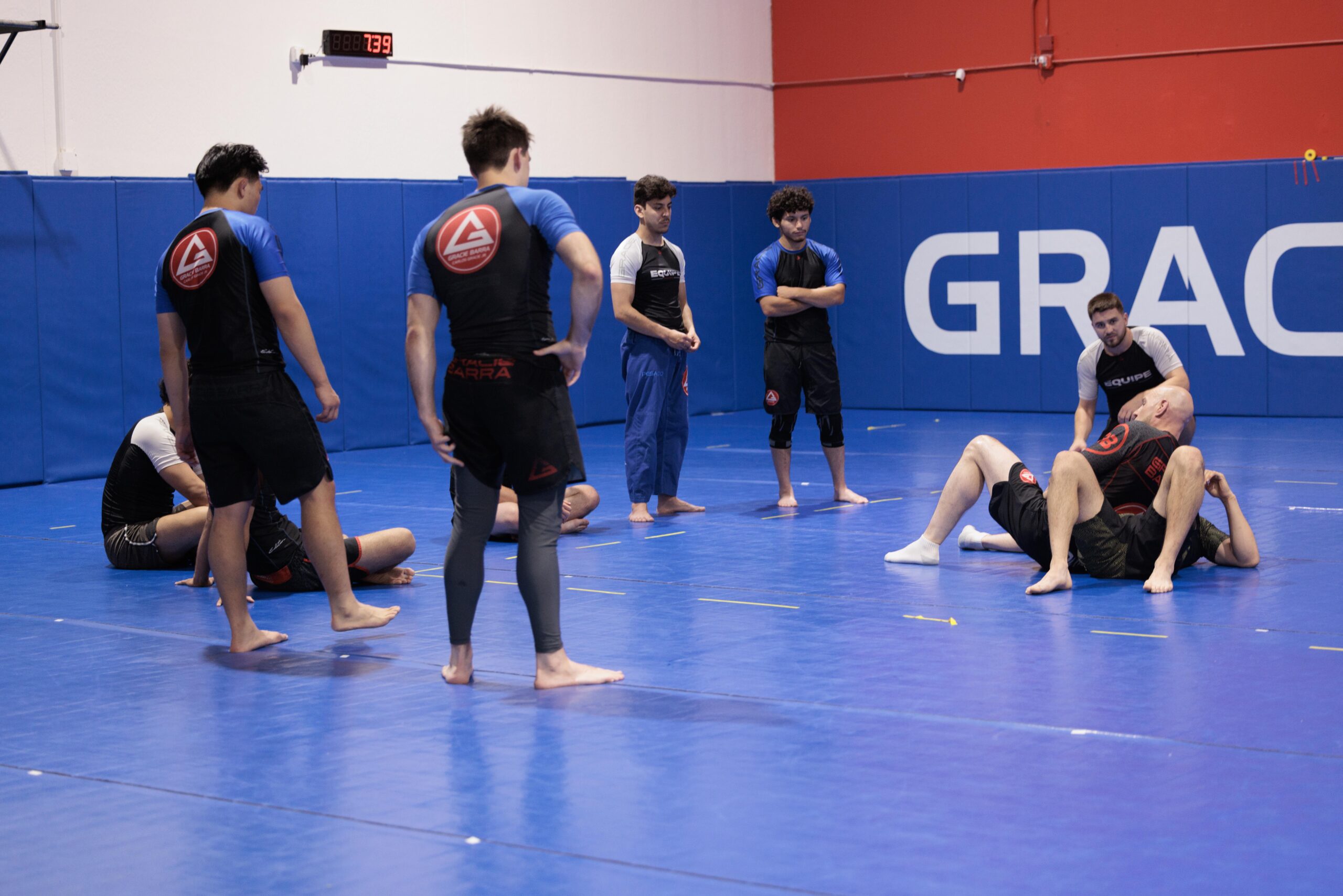
Advancing past the white belt level requires disciplined training and consistent mat attendance. Students at Gracie Barra Libertyville programs follow a proven curriculum designed to build spatial awareness, lever control, and defensive composure under live resistance.
DISCOVER Gracie Barra Libertyville
CLICK HEREFoundational Defensive Competencies and Escapes
Mastering the fundamental blue belt requirements in bjj begins with unshakeable defense. Before students initiate complex offensive combinations, they must prove their ability to remain calm and protect themselves in compromised positions.
Defensive Composure in Bad Positions
Surviving high-pressure bottom positions requires steady breathing and purposeful frame alignment. Novice practitioners often waste energy thrashing wildly, whereas blue belt candidates remain calm while systematically protecting vulnerable neck and joint angles.
Developing genuine defensive composure allows students to preserve energy throughout intense training rounds. Consistent mat sparring helps athletes recognize positional danger early, neutralize incoming pressure, and prepare efficient timing for subsequent escapes.
Side Control Framing and Hip Escapes
Escaping side control demands proper forearm frames placed firmly across your opponent’s jaw and hip line. These rigid structural frames create the space needed to bridge explosively and initiate a clean hip escape.
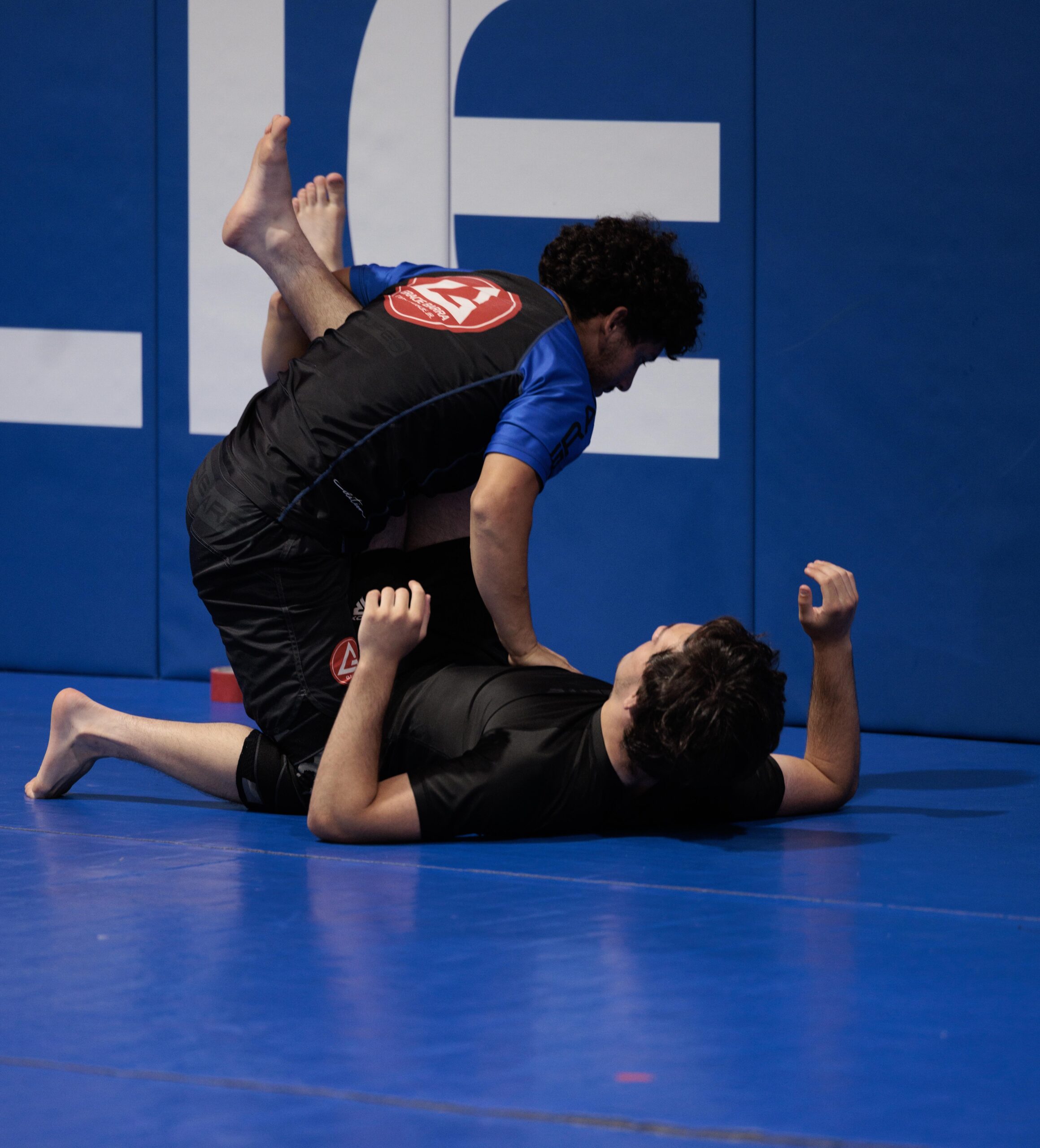
Coordinating your feet, core, and arms ensures effective movement beneath heavy top pressure. Shrimping your hips backward creates room to re-insert your active knee shield and restore an offensive guard alignment.
Mount Survival and Reversal Mechanics
Surviving the mount requires keeping elbows tight against the ribcage to deny high-mount advancement. Maintaining tucked elbows simultaneously protects the neck against collar strangulations and arm attack setups.
Reversing top mount requires precise hip bridge timing and explosive directional redirection. Mastering the classic elbow-knee escape and trap-and-roll reversal guarantees you can return to a safe, neutral guard.
Back Control Defense and Neutralization
Defending back attacks begins with persistent two-on-one hand fighting to protect your neck against choking grips. Blue belt candidates prioritize clearing the over-hook arm before attempting any body displacement maneuvers.
Neutralizing back control involves sliding your shoulders flat to the mat while slipping past the opponent’s hip hooks. Once your hips turn inward, you can establish top half guard or closed guard.
Guard Management and Dynamic Passing Mechanics
Guard play represents the strategic center of Brazilian Jiu-Jitsu. Aspiring blue belts must demonstrate a functional bottom guard capable of initiating sweeps alongside a methodical top passing system.
Closed Guard Control and Sweeps
Maintaining closed guard demands active posture disruption through deliberate sleeve and collar grips. Controlling your opponent’s head position prevents them from establishing heavy posture, which sets up basic sweeps and joint submissions.
Executing foundational sweeps like the scissor sweep, bump sweep, and flower sweep destabilizes the top player. Effective sweeps force top opponents to defend rather than coordinate their own passing routes.
Open Guard Mobility and Distance Control
Operating from open guard relies on establishing multiple connection points using your feet, shins, and sleeve grips. Dynamic foot placement keeps the top passer off-balance while preventing them from securing chest-to-chest contact.
Utilizing foundational guards like butterfly or De La Riva allows practitioners to manage spatial distance effectively. Proper hook tension and framing tire aggressive passers and open clear paths toward back takes or sweeps.
Pressure and Torreando Guard Passing
Passing the guard requires maintaining an upright spine while controlling your opponent’s hips and lower limbs. Executing high-mobility maneuvers like the Torreando pass forces the bottom player to chase recovery angles.
Blending dynamic outside footwork with calculated chest-to-chest pressure passing breaks down complex guard structures. Prospective blue belts must complete guard passes without exposing their arms or necks to counter-attacks.
Core Submission Competencies and Positional Control
While defensive resilience remains the primary standard, blue belt candidates must also demonstrate clean execution of core submission holds. Attacks must always stem from positional control rather than reckless physical exertion.
Upper Body Joint Manipulations
Executing the straight armbar from mount or closed guard requires controlling the opponent’s wrist, trapping their elbow, and pinching your knees tightly. Elevating your hips applies safe leverage against the isolated joint.
Applying rotational joint attacks like the kimura and americana demands securing a firm figure-four wrist grip. Proper body angling generates clean mechanical pressure on the shoulder while isolating your partner’s torso.
Fundamental Chokes and Strangles
Precision strangles like the cross-collar choke, triangle choke, and rear-naked choke target carotid blood flow to achieve clean technical finishes. Candidates must understand proper angle alignment rather than relying on upper-body squeezing.
Executing fundamental chokes with proper mechanics ensures training partners tap safely without sustaining neck trauma. Demonstrating technical restraint during submission application is a major indicator of promotion readiness.
Positional Pinning and Transition Flow
Maintaining dominant pins across side control, knee-on-belly, and mount requires active weight distribution and heavy shoulder pressure. Stable pinning immobilizes opponents, frustrates their escape attempts, and creates openings for offensive transitions.
Fluidly transitioning between pins prevents frantic scrambles and exhausts defensive opponents. Learning to float across positions smoothly while maintaining base ensures you remain in complete control throughout the sparring round.
Technical Guidance and Academy Mat Standards
Meeting promotion benchmarks extends beyond technical performance in isolated drilling scenarios. Instructors evaluate each student’s emotional composure under pressure, commitment to safety, mutual respect, and regular weekly attendance on the mat.
Experienced head professors monitor your growth, sportsmanship, and humility during live rolling rounds. The dedicated coaching team at Gracie Barra Libertyville instructors provides personal feedback to guide every student toward their promotion milestone.

Practical Consolidation of Blue Belt Skills
Earning a blue belt represents the transition from defensive survival to thoughtful strategic development. Consolidating the blue belt requirements in bjj into muscle memory provides an enduring technical foundation for advanced martial arts progression.
Regularly refining fundamental mechanics prevents technical blind spots from slowing your future progress. Developing a balanced personal game plan ensures steady growth across both top and bottom grappling positions.

DISCOVER Gracie Barra Libertyville
CLICK HEREAchieving Your Next Step on the Mat
Satisfying the fundamental blue belt requirements in bjj demands patience, humble repetition, and consistent class attendance. Every hour spent refining defensive posture, escaping pressure, and executing controlled transitions builds technical confidence.
Practitioners throughout Libertyville, IL are welcomed to experience structured Jiu-Jitsu training in a supportive community. Contact our team today to take the next rewarding step on your personal martial arts path.